
Throughout human history, people’s minds have naturally wandered. Long before modern technology and busy daily schedules, thinkers and seekers noticed how easily attention slips away from what we are doing toward past memories, worries, or hopes for tomorrow. It is an inevitable feature of our human consciousness.
In today’s fast-paced world, that restless feeling is even more common. Surrounded by constant distractions, many of us are searching for simple, practical ways to ground ourselves and live in the present moment.
What is mind wandering?
Mind wandering is simply spontaneous thought. It occurs when our attention shifts away from whatever we are currently doing toward our inner thoughts.
Research shows that our minds spend nearly half of our waking lives wandering: planning, remembering, worrying, imagining, and rehearsing scenarios. It is easy to view this mental drift as a flaw or feel frustrated by it, but mind wandering actually evolved as a natural feature of consciousness that fuels our creativity, problem-solving, and vision for the future.
Problems only arise when mind wandering turns into ongoing distraction, rumination, or emotional suffering. The good news is that your wandering mind is not a flaw to eliminate. You do not need to fight your thoughts or force your mind to go completely blank. Instead, you can learn how your attention works and practice evidence-based techniques to gently guide it back when it drifts.
How do I control my mind wandering?
Controlling a wandering mind is not about stopping your thoughts entirely. It is about building self-awareness so you can notice when your focus has drifted without feeling bad about it.
By combining modern science with practical wisdom traditions, we can build better mental habits with a few simple approaches:
- Self-Inquiry and Reframing: Asking simple questions, such as Who Am I?, helps you realize you are more than just your passing thoughts. Approaches like Acceptance and Commitment Therapy (ACT) give you space to notice thoughts calmly instead of reacting to them immediately.
- Breaking Thinking Loops: When thoughts turn into repetitive worry, practicing tools for dealing with pervasive thoughts helps you catch those mental loops before they become automatic habits.
- Grounding Your Attention: Focus is like a muscle that gets stronger with practice. Simple physical check-ins, breathing exercises, and basic mindfulness bring your attention back to your body, pointing you toward the happiness method of enjoying where you are right now.
When you notice your thoughts with simple curiosity instead of frustration, mind wandering stops feeling like a problem and becomes a way to understand yourself better.
Tame your wandering mind
If you want to better understand how focus works and get practical tools to manage your thoughts, we invite you to check out our upcoming online course with IONS scientist Arnaud Delorme.
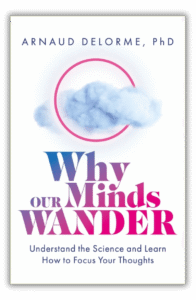 This course is based on Arnaud’s book, Why Our Minds Wander, bridging cutting-edge cognitive neuroscience, psychology, and contemplative traditions. Over nine engaging modules, he translates complex brain science into clear, real-world insights about why thoughts arise, what happens in the brain during mind wandering, and how attention shapes your daily experience.
“My intention for this course is to help you demystify your inner world. By understanding the science behind why our minds drift, we can stop treating our thoughts as enemies and start using attention as a tool for clarity, calm, and genuine presence.”
— Arnaud Delorme, PhD
Each module concludes with a guided experiential practice, including mindfulness meditation, cognitive reframing, attention training, and body-based releasing techniques, so you can apply what you learn directly in your own life.
Live in the present moment
Learning to guide your attention allows you to turn a wandering mind from a source of daily distraction into a helpful tool for self-discovery and well-being. By exploring the science behind your thoughts and practicing simple focus exercises, you can break automatic thinking loops and feel more grounded in the present moment.
LEARN MORE AND REGISTER FOR THE TAMING THE WANDERING MIND COURSE
