
ConnectIONS Live!
Meditation is widely practiced, yet questions remain about how different techniques shape the mind and body. The Citizen Science Meditation Study explores this by combining large-scale public participation with wearable neurotechnology.
In this webinar, researchers from the Institute of Noetic Sciences and InteraXon share findings from a global study comparing four meditation practices—mindfulness, loving-kindness, nondual, and mantra—alongside an active control. Using the MUSE EEG headband, participants tracked changes in well-being, mood, cognition, brain activity, and heart rate variability over four weeks.
Together, the speakers offer a closer look at how different approaches to meditation may influence mental and physiological states—and what this could mean for the future of meditation research.
Meditation at Scale: What a Global Citizen Science Study Reveals About Mind and Brain
Friday, May 15
11:00am – 12:00pm PDT
All registrants will receive a link to the recording. Please register even if you can’t attend live.
PRESENTERS

Helané Wahbeh, ND, MCR is Director of Research at the Institute of Noetic Sciences, where she leads rigorous interdisciplinary research on consciousness, health, and extended human capacities. She earned a Master of Clinical Research through Oregon Health & Science University’s Human Investigations Program, completed two postdoctoral research fellowships, and received a five-year National Institutes of Health K award for advanced training in clinical research, neuroscience, electrophysiology, and biostatistics. Dr. Wahbeh is especially known for her pioneering research on channeling, has authored more than 100 peer-reviewed journal articles, and brings more than 25 years of dedicated meditation practice to her work at the frontiers of noetic science.
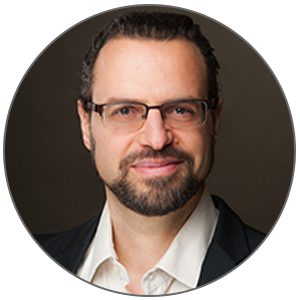
Arnaud Delorme, PhD, is a neuroscientist at IONS and has been studying human consciousness for the last 20 years. He is a CNRS Research Director in Toulouse, France, and a senior Research Scientist at the University of California, San Diego. He is a long-time Zen meditator, and recipient of several research prizes. He is the author of some 160+ peer-reviewed publications, and is best known for his work on the neural correlate of mind wandering and for developing the EEG software that is now the most-used in EEG research worldwide. He is the author of Why Our Minds Wander: Understand the Science and Learn to Focus Your Thoughts.
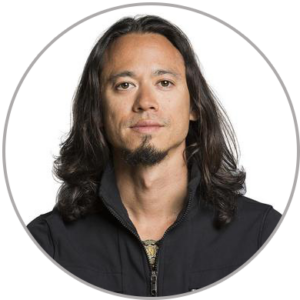 Chris Aimone is the Co-Founder and Chief Technology Officer at Interaxon Muse. Chris Aimone, serving as the Co-Founder and Chief Technology Officer at Interaxon Muse, combines a rich background in technology and innovation with a strong passion for human-centered design. At Interaxon Muse, he focuses on developing brain-sensing technologies that empower individuals to understand and enhance their cognitive and emotional well-being. Aimone’s work integrates insights from neuroscience, psychology, and technology to create products that are not only technologically advanced but also accessible and beneficial for users. His leadership in technology development and commitment to improving mental health through innovative solutions have positioned Interaxon Muse as a leader in the field of brain-computer interfaces. Chris has specifically studied the relationship between EEG changes and meditation since 2010 and is the author of several patents in this domain. He and his team have developed machine learning models to analyze meditation data from the Muse device, and to compare novel data to the 1 billion minutes of pre-existing Muse meditation and sleep session data.
Register for Free
