
Imagine two laboratories. The first studies a fashionable medical treatment with a tiny sample of patients, tries dozens of analyses, stops when a favorable result appears and publishes only that result. The second tests telepathy, but registers its prediction in advance, uses a large sample of subjects, randomizes the target, blinds the experimenters and judges, publishes the data and invites replication. Which laboratory is doing science?
The reflex of the ordinary man is to answer by looking at the subject. Medicine sounds scientific and telepathy does not. But that is precisely the wrong test. The first laboratory is wearing the costume of science, the second is using its method.
Science is not a fenced territory containing respectable topics. It is a disciplined way of asking nature questions while making it difficult to fool ourselves. The US National Academies puts it plainly: “what makes a unit or body of knowledge scientific is the process by which it was established, not the topic it concerns.”
Any claim that produces observable consequences can, in principle, be investigated: a planet’s orbit, a report of mystical unity or a guess about a hidden image. “Repeatable” need not mean that every event occurs on command: astronomers study explosions that happen once. It means the observation, procedure, prediction or evidence can be checked independently.
What is the method of doing good science?
There is no single five-step recipe for all science. Field observation, laboratory experiment, mathematical modeling and historical reconstruction work differently. Good inquiry nevertheless has a recognizable backbone. Imagine testing whether Kiara can predict the color of a card before a computer chooses it.
- Be specific. Kiara predicts “red” or “blue” before each card is chosen.
- Make it fair. The computer chooses randomly, and nobody can see the card early.
- Decide the rules first. Before starting, choose 100 trials and define what counts as success.
- Don’t stop when Kiara gets lucky. Complete all 100 trials—even if she begins with ten correct guesses.
- Report everything. Share every guess, not just Kiara’s best streak.
- Try again. Let another laboratory repeat the same test.
- Accept the result. If the effect disappears under fair testing, change the claim—not the rules.
When the observation arrives before the explanation
The absence of a final theory has never been a reason to discard a stable observation. Around the turn of the twentieth century, physics advanced because anomalies were measured before they were understood.
Measurements of radiation from hot objects would not fit the available classical formulas across the full spectrum. The data came first. Planck’s 1900 quantum step theory came later and opened quantum physics. Hertz observed the photoelectric effect in 1887. Einstein’s 1905 light-quantum account later explained results that classical theory could not.
Michelson and Morley’s 1887 experiment failed to detect the expected ether drift. Relativity later made sense of that null result without ether. Astronomers had likewise measured a residual advance in Mercury’s orbit—about 43 arcseconds per century beyond known Newtonian effects—decades before general relativity accounted for it.
Most strange results come from chance, bias, or poor controls. They do not always lead to a scientific revolution. But we should not reject an observation simply because we cannot yet explain it. A claim becomes weak when the test is unfair, the methods are unclear, or other researchers cannot repeat the result.
IONS, psi and the right to ask
The Institute of Noetic Sciences (IONS) is a revealing case. Apollo 14 astronaut Edgar Mitchell founded it in 1973 after an intense experience of interconnectedness on his return from the Moon. The scientific move was not to declare that experience a theory, but to turn it into questions that could be observed, compared and tested.
“Psi” covers proposed capacities such as telepathy, precognition and mind–matter interaction not explained by known sensory or physical channels. The word does not settle whether they exist. Instead, it names a research question. IONS uses controlled tasks, large online datasets and protocols such as the Ganzfeld, a homogeneous sensory environment used to test anomalous perception or precognition.
IONS publishes both positive and negative results, because science is a process of testing ideas—not a search for a particular answer.
What does pseudo-method look like?
Imagine testing a new pill that is supposed to improve memory.
- Too many chances. Researchers test memory, mood, sleep, energy, and attention—then report only the one result that looks positive.
- Too few people. Three of five patients improve, so the researchers declare the drug effective.
- An unfair comparison. The drug group is younger or healthier than the control group.
- No blinding. Patients and doctors know who receives the drug, so their expectations may influence the results.
- Changing the rules. Researchers stop the study during a lucky streak or remove patients whose results do not fit, classifying them as outliers.
- Hiding failures. Positive studies are published, while negative studies disappear.
- Rejecting criticism. When other laboratories cannot repeat the result, the researchers make excuses instead of questioning the claim.
These problems can happen in any field. A study is scientific only when its method is fair, clear, and open to being wrong.
What did psi research give back to the scientific method?
But because psi expected effects were small, its claims controversial and leakage or selective reporting plausible, it became an unusually demanding proving ground for scientific safeguards.
Psi research helped pioneer meta-analysis. In their 1940 book, Extra-Sensory Perception After Sixty Years, J. G. Pratt, J. B. Rhine, and their colleagues combined the results of decades of ESP experiments. It was one of the earliest comprehensive statistical reviews in science.
Randomization appeared in nineteenth-century telepathy experiments before it became routine. More decisively, in 1974 parapsychologist Martin Johnson proposed judging hypotheses, methods and analyses before data collection and guaranteeing publication regardless of outcome. The European Journal of Parapsychology ran this prototype of today’s Registered Reports from 1976 into the 1990s.
In the Ganzfeld controversy, skeptic Ray Hyman and proponent Charles Honorton jointly called for randomization, blind judging, complete reporting, separate exploratory and confirmatory analyses, and corrections for multiple tests. These practices are now common standards in scientific research.
That is the point. Science is not a collection of conclusions we are obliged to like. It is a public procedure for discovering which conclusions survive our best attempts to break them.
“Pseudoscience” is an easy label, but it does not tell us what went wrong. We should ask better questions: Can the claim be tested? Was the test fair? Were the rules decided in advance? Were all the results reported? Can others repeat the study? Did the researchers change their minds when the evidence changed?
IONS and psi research should follow the same rules as every other field. They should not receive special treatment, either positive or negative. An unexplained result is a reason to design a better test—not to force an explanation or stop asking questions.
No topic is automatically pseudoscience. There are only poor methods—and scientific methods that reveal them.
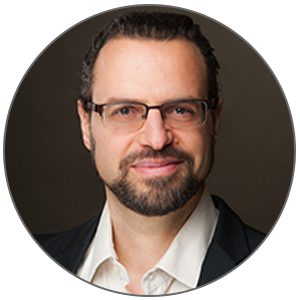
Arnaud Delorme, PhD, is a neuroscientist at IONS and has been studying human consciousness for the last 20 years. He is a CNRS Research Director in Toulouse, France, and a senior Research Scientist at the University of California, San Diego. He is a long-time Zen meditator, and recipient of several research prizes. He is the author of some 160+ peer-reviewed publications, and is best known for his work on the neural correlate of mind wandering and for developing the EEG software that is now the most-used in EEG research worldwide. He is the author of Why Our Minds Wander: Understand the Science and Learn to Focus Your Thoughts.
